

In 1924, the French Republic went through a delicate period marked by political and social tensions. It is in this context that Gaston Doumergue is elected President of the Republic, embodying a figure of consensus capable of calming divisions and guiding the country towards regaining stability. A review of this election and the challenges that Doumergue faced during his tenure.
Gaston Doumergue's election to the presidency in 1924
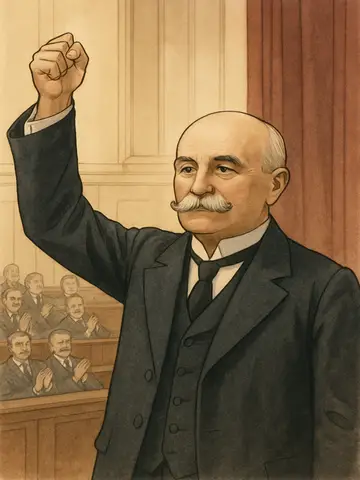
Gaston Doumergue was elected President of the French Republic on 13 June 1924, succeeding Alexandre Millerand. His candidacy enjoyed broad support, in particular because he was perceived as a moderate politician, capable of unifying the various republican factions that then dominated the political landscape. Doumergue, former Minister and President of the Council, is appreciated for his ability to act as an impartial arbitrator. His election took place in a context in which the left, grouped in the Left Cartel, had just won the legislative elections, showing a desire for renewal and dialogue at the state summit.
The political challenges of Gaston Doumergue's mandate
Gaston Doumergue's presidential term, although marked by a will to calm down, is facing many challenges. The economic tensions resulting from the First World War, the reconstruction of the country and the persistent disagreements between the various political forces make its mission particularly difficult. Doumergue must navigate between often fragile coalition governments and distrustful public opinion. Moreover, the rise of nationalism and social movements requires a certain firmness in crisis management. Despite these obstacles, he managed to embody a respected presidential function, playing an essential role in the political stabilisation of France during the 1920s.
The election of Gaston Doumergue in 1924 marked an important turning point in the French political life of the inter-war period. By choosing a moderate and conciliatory president, the Republic affirms its desire for stability and dialogue. While his mandate had been difficult, it had also helped to preserve national unity at a time when tensions could have weakened institutions for the long term. Gaston Doumergue remains an emblematic figure of the French presidency in a period of transition.