


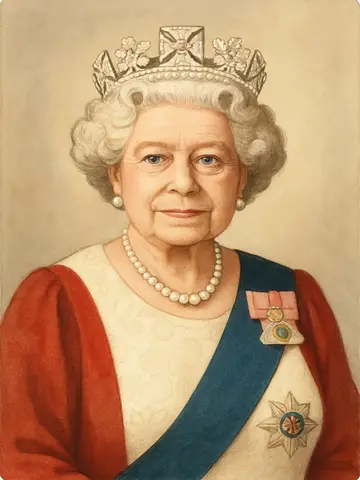
The accession of Elizabeth II to the throne in 1952 marks a historic moment for the United Kingdom and the Commonwealth. At only 25 years old, she became sovereign at a time of profound political, social and cultural change. Its reign, which spans several decades, is a continuation of a constitutional monarchy while adapting to the realities of the modern world.
The accession of Elizabeth II to the throne in 1952
On February 6, 1952, after the sudden death of his father, King George VI, Elizabeth II, entered the British throne. This unforeseen succession occurred while she was travelling to Kenya, highlighting the speed with which she had to shoulder her new responsibilities. Its official coronation, which will take place in 1953, will be the first to be televised, symbolizing a desire for openness and modernity. The accession of Elizabeth II also consolidates the unity of the United Kingdom and its Overseas Territories in a time when the British Empire is living its last hours.
The first challenges of the reign of Elizabeth II
From the beginning of his reign, Elizabeth II faced several major challenges. Post-war reconstruction is far from complete, with persistent economic tensions and aspirations for independence in several settlements. In addition, the young queen must learn to navigate a political landscape dominated by experienced and sometimes very different prime ministers. Personally, she must reconcile her royal duties with her nascent family life. These first obstacles forge his image of a stable and devoted monarch, capable of embodying both tradition and renewal.
The accession of Elizabeth II to the throne in 1952 inaugurated a new era for the British monarchy. Faced with major challenges, it has been able to assert its role with dignity and modernity, becoming an iconic figure respected both in the United Kingdom and throughout the world. His reign remains a symbol of continuity and resilience in a century marked by profound upheavals.