

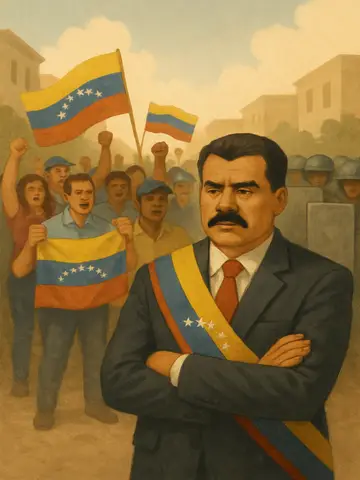
The year 1998 marks a decisive turning point in the political history of Venezuela. After a decade of economic, social and institutional unrest, the country is plunged into a deep crisis that will reshape its political landscape. This crisis leads to capital presidential elections, which will pave the way for a radical change in the Venezuelan political system.
Historical context of the political crisis in Venezuela in 1998
In the years prior to 1998, Venezuela was facing a series of severe economic crises, including a deep recession caused by the fall in oil prices, the country's main wealth. This situation exacerbates social inequalities and generates widespread dissatisfaction with traditional political parties, perceived as corrupt and ineffective. The bipartisan political system in place is faltering, while the institutions are losing credibility. In addition, two coup d'état attempts in 1992 by former military officer Hugo Chávez symbolize the rise of radical opposition. This unstable environment creates fertile soil for major changes in the direction of the country.
Major consequences of the 1998 presidential elections
The December 1998 presidential elections saw the spectacular victory of Hugo Chávez, an outsider candidate and emblematic figure of the rejection of the traditional political class. Its election marks the beginning of the « Bolivarian Revolution »a process of profound transformation of Venezuela through constitutional, social and economic reforms. This election also transforms the political scene by putting an end to the historical domination of the duo Acción Democrática and COPEI, and by creating a populist movement that mobilizes a large part of the population, especially the popular classes. However, this victory also inaugurates an era of increased polarization and political tensions that will permanently influence the country's trajectory.
The political crisis of 1998 in Venezuela was a pivotal moment that disrupted the traditional structures of power and led to a profound redefinition of national political identity. Building on a break with the existing elites, it paved the way for a new political dynamic, whose effects are still being felt today. Understanding this turning point is essential to grasp Venezuela's current challenges and challenges.