


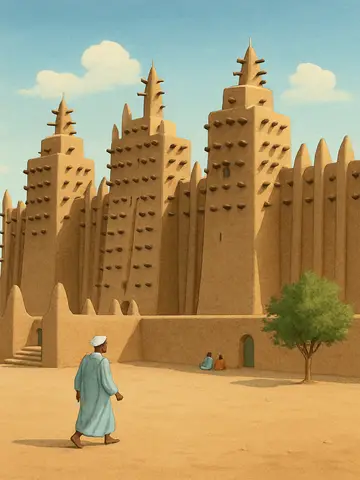
The Great Mosque of Jenne, a major emblem of Sudanese architecture, is a jewel of Malian heritage. Built on the ruins of an ancient mosque, its current version dates back to 1907, making it an architectural marvel full of history and traditions. This building is not limited to a religious function, it is also a cultural symbol deeply rooted in the identity of Djenné and Mali as a whole.
History and architecture of the Great Mosque of Jenné
The Great Mosque of Djenné originated in the 13th century, but it was the reconstruction carried out in 1907 that gave it its current emblematic appearance. Built in banco, a mixture of raw earth, straw and water, this mosque is a perfect example of Sahelian Sudanese architecture. Its imposing structure, with its massive pillars and torch-shaped foothills, perfectly illustrates the local ingenuity in construction. The site hosts each year a large traditional renovation ceremony, the « Crushing », which strengthens the link between the community and the building. This building is not only a place of worship but also a living witness to the cultural and historical exchanges of the region.
The restoration of 1907: a symbol of Malian heritage
The restoration of 1907 was a crucial step in the preservation of the Great Mosque of Jenné. Under the impetus of the French colonial authorities, this reconstruction aimed to consolidate a fragile monument while respecting ancestral techniques. The project has also brought to life a strong symbol for the people of Djenné and more broadly for Mali, affirming the importance of safeguarding African cultural heritage. Since then, the mosque has become an identity landmark and a remarkable example of sustainable conservation, attracting researchers, tourists and faithful. Its inclusion in UNESCO's world heritage reflects its universal value and its role in the transmission of traditional know-how.
The Great Mosque of Djenné, restored in 1907, embodies more than just a place of worship: it is the beating heart of Malian collective memory and a unique architectural masterpiece. Its beauty and cultural significance continue to fascinate, recalling the importance of preserving these treasures for future generations. Between tradition and modernity, it remains a living symbol of the Djennean identity and a beacon for all African heritage.