

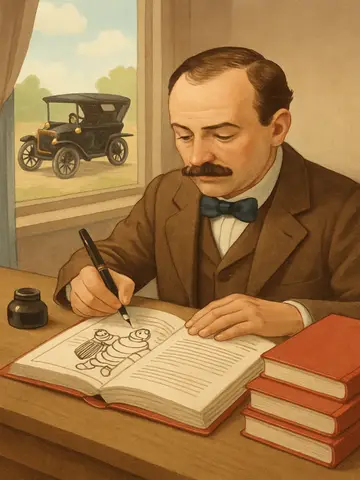
At the turn of the 20th century, France experienced a rapid rise in automobiles and leisure trips, requiring new resources to accompany motorists. In this context, the Michelin Guide was born in 1900, an editorial innovation designed to facilitate travel and tourism.
Historical background and birth of the Michelin Guide in 1900
At the end of the 19th century, the industrial revolution profoundly transformed French society. The appearance of the first cars, although reserved for an elite, announces a change in the modes of travel. Road infrastructure is still rudimentary and passenger services are poorly developed. In 1895 the Michelin brothers founded their tyre company in Clermont-Ferrand. In order to encourage the use of automobiles and, consequently, the demand for tyres, in 1900 they published a small free guide including maps, technical advice, useful addresses, hotels and service stations. This pragmatic document aims to help drivers plan their journeys in a France that was then poorly equipped.
Issues, key players and sustainable impacts of the first Michelin Guide
The Michelin Guide, initiated by Édouard and André Michelin, addresses a dual economic and social challenge: stimulating tyre sales while structuring a growing tourism sector. The publication quickly influenced the development of road and hotel infrastructure, contributing to the democratization of travel by car. Its rigorous methodology, with a selection of reliable addresses, establishes a quality standard in catering and accommodation. This guide becomes a major cultural actor, announcing the famous Michelin stars that value culinary excellence. It is also a continuation of the industrial development of France and precedes other innovations related to mobility, such as the creation of major national roads in the 1920s or the popularization of the post-war automobile.
The Michelin Guide of 1900 embodies a pragmatic response to the social and technological transformations of his time, laying the foundations for an indispensable tool for modern tourism and international recognition of French gastronomy.