


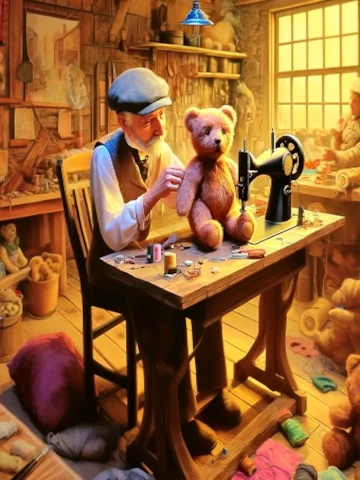
Teddy bear, this soft and comforting companion, is today an iconic toy for children around the world. Yet its history begins at a very specific time: the year 1902. This creation marked a turning point in the universe of the toy and was able to impose itself in the homes, quickly becoming a symbol of affection and innocence.
The invention of teddy bears in 1902
Teddy bear was born in 1902 thanks to a competition of independent but complementary events. In the United States, history is related to an incident involving President Theodore Roosevelt, who refused to kill a bear during a hunt in Mississippi. This episode inspired cartoonist Clifford Berryman and, in parallel, toy maker Morris Michtom created a teddy bear in tribute to this event. In Germany, the Steiff company, led by Margarete Steiff, almost simultaneously developed a prototype of teddy bears. These two initiatives have helped to popularize this cozy toy from the very beginning, laying the foundations for a global phenomenon.
The cultural impact of teddy bears in the early 20th century
Teddy bear quickly became much more than just a toy; It has established itself as a powerful emotional symbol in popular culture. From his early years, he embodied tenderness and protection, becoming a very popular gift for children and an object of collection for adults. Teddy bears also influenced literature and the arts, inspiring stories, films and songs. Their success has contributed to the growth of the modern toy industry, showing the growing importance of play in childhood development. Thus, the teddy bear not only conquered the hearts, it also transformed the way society considered toys and childhood.
The creation of teddy bears in 1902 remains a key step in the history of the toy. From its origins linked to a real fact to its major cultural role, this simple object has been able to pass through times and generations. Today, the teddy bear continues to symbolize softness and comfort, demonstrating the lasting importance of an inventive and emotional toy.