

In 1921, a revolutionary fragrance was created in France, marking a major turning point in the world of perfumery and fashion.
Historical and social context of the creation of Chanel No. 5 in 1921
After the First World War, France experienced a period of reconstruction and cultural renewal, marked by a desire for emancipation and modernity. Paris, the artistic and industrial capital, becomes the home of innovations in fashion and lifestyle. Gabrielle Chanel, already famous for her sober and elegant clothing creations, wishes to embody this new era through a perfume. Society is undergoing a social upheaval, particularly with the emergence of women in public life and the questioning of old codes, which paves the way for a bold fragrance for an independent female clientele.
Essential facts and cultural impact of the iconic Chanel No5 perfume
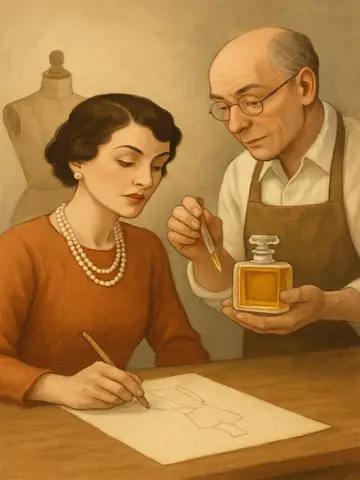
Designed by Ernest Beaux, renowned perfumer, Chanel No5 was launched in 1921. Its innovative composition incorporates a complex structure combining floral notes and aldehydes, previously little used in perfumery. This technical choice revolutionizes olfactory creation, offering women an unprecedented signature, both abstract and sophisticated. The perfume quickly became a symbol of luxury and modernity, worn especially by icons like Marilyn Monroe in the following decades. Its impact exceeds the commercial framework: it embodies the femininity liberated from the post-war period and profoundly influences the aesthetic standards of the twentieth century, consolidating Chanel's place as a pioneer house.
Chanel No.5, the result of a historical context conducive to innovation, remains a global benchmark, reflecting an era of major cultural and social transformation.