


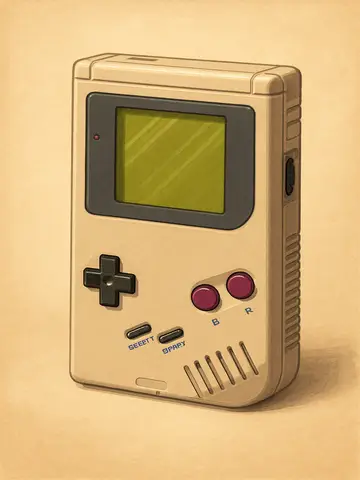
In 1989, Nintendo marked the history of the video game with the launch of its portable console, the Game Boy. This innovation revolutionized the way players interacted with games, making entertainment possible anywhere and at any time. The Game Boy, with its compact design and captivating gaming library, quickly conquered a wide audience and left a lasting impression in the video game industry.
The revolutionary impact of the Game Boy in 1989
The Game Boy represented a real technological revolution when it was released in 1989. Unlike the competing portable consoles of the time, it combined an impressive battery life, an easy-to-read monochrome display and an accessible price. Its robustness and simplicity have allowed millions of players to discover the pleasure of the nomadic game. Headlines like « Tetris » contributed to its tremendous success, transforming the Game Boy into a cultural phenomenon beyond mere entertainment.
How the console changed the landscape of portable video game
Prior to the Game Boy, mobile video games were often limited to specialized devices, often not very user friendly and not very diverse in terms of games. The Game Boy has changed this by offering a modular system with interchangeable cartridges, paving the way for a multitude of genres and fun experiences. He set a standard for future portable consoles, proving that video games can be both portable, accessible and deeply engaging, and have a lasting impact on the design of mobile consoles.
The launch of the Game Boy in 1989 was much more than just a console release; It has been a major turning point in the history of video games. By democratizing the portable game, Nintendo not only captivated an entire generation but also laid the foundations for future innovations in this field. Today, the Game Boy remains an emblematic symbol of the mobile entertainment revolution.