


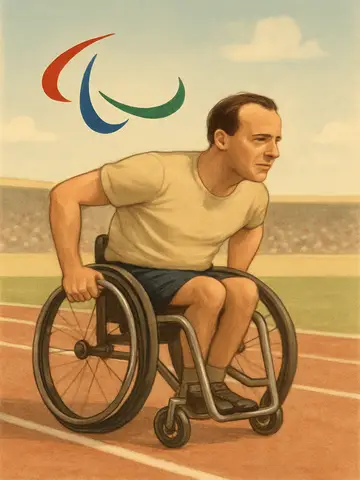
The Paralympic Games have revolutionized the perception of sport for people with disabilities, offering an international competition platform that celebrates resilience, strength and sportsmanship. The origin of this major event dates back to 1960, a pivotal year that marked the beginning of an inclusive and inspiring sporting tradition.
The historical beginnings of the first Paralympic Games
The first Paralympic Games took place in 1960 in Rome, Italy. The event brought together about 400 athletes from 23 countries, all with physical disabilities, mainly war-wounded or paralyzed. Designed as an extension of the competitions organized for injured veterans, these games were the first international opportunity to promote sports practice adapted to a wide audience with disabilities. The event highlighted not only the sporting capabilities of participants, but also a crucial change in the social and medical recognition of disability.
Rome 1960: birth of a major sporting event
The holding of the Paralympic Games in Rome in 1960 marked a decisive step towards the equality and visibility of athletes with disabilities. Hosted in parallel with the Summer Olympic Games, these games received significant media coverage and institutional support that facilitated their official recognition. Rome has thus become the pioneer city of a movement that will develop on a global scale, laying the foundations for future editions and the exponential growth of Paralympic sport. This founding moment set the stage for an annual competition that now unites thousands of athletes around the values of courage, self-exhaustion and solidarity.
The first Paralympic Games of 1960 in Rome represent more than just a sporting competition; They embody the emergence of a profound change in the way society perceives disability and human potential. Through this inaugural edition, the world has discovered a new form of sporting excellence, which continues to inspire and raise standards of inclusion and respect in sport and beyond.