


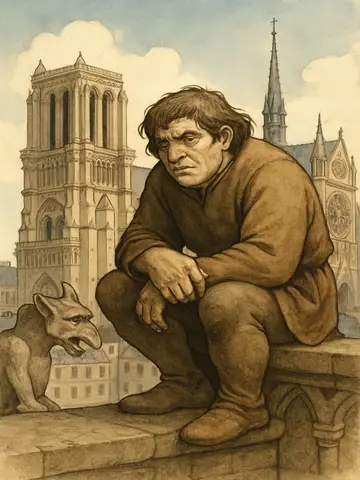
Notre Dame de Paris Cathedral, a jewel of Gothic architecture, is much more than just a historic monument. Thanks to the writer Victor Hugo and his novel published in 1831, « Notre-Dame de Paris »This monumental work has seen its history and beauty rediscovered by entire generations. This article explores how Victor Hugo influenced the recognition and preservation of Notre-Dame, as well as the cultural and literary importance of his iconic novel.
Victor Hugo's impact on the rediscovery of Notre-Dame
At the beginning of the 19th century, Notre-Dame Cathedral in Paris was in an advanced state of disrepair, often ignored and threatened by partial demolition projects. Victor Hugo, aware of the historical and architectural richness of the monument, published his novel in 1831 « Notre-Dame de Paris » to raise public awareness of the heritage value of this cathedral. His work arouses a collective awareness that leads to a mobilization for the restoration of Notre-Dame. The novel thus becomes a powerful vehicle for safeguarding the heritage, encouraging the authorities to undertake renovation works led by the architect Eugène Viollet-le-Duc, ensuring the survival of the monument for the centuries to come.
« Notre-Dame de Paris » : an iconic 1831 novel
Published in 1831, « Notre-Dame de Paris » is more than just a historical or romantic story. This novel mixes history, poetry and social criticism with unforgettable characters such as Quasimodo, Esmeralda, and Claude Frollo. By placing his intrigue in the majestic setting of the cathedral, Victor Hugo gives the place a powerful symbolic dimension, where human tragedy and architectural grandeur intersect. The book is extremely successful and lays the foundations of French romantic literature by offering a living fresco from Paris in the Middle Ages, while stressing the importance of preserving the heritage in the face of modern upheavals.
Victor Hugo, with « Notre-Dame de Paris », managed to give a new life to a cathedral at risk, transforming a monument often neglected into a national and universal symbol. His 1831 novel remains to this day a major work that continues to wonder and educate, recalling that behind every stone of Our Lady lies a rich history worthy of protection and celebration. Thanks to him, Notre-Dame de Paris is no longer just a building, but a living legend deeply rooted in the hearts of French and art lovers around the world.