


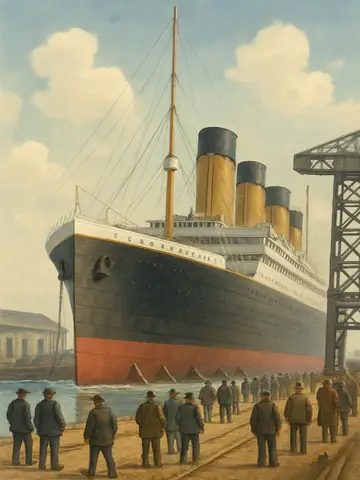
The Titanic, the legendary ship of the White Star Line, remains one of the most emblematic ships in maritime history. Launched in 1912, it symbolizes both the climax of naval technology of its time and the tragedy that profoundly marked the twentieth century. This article traces the incredible launch of the Titanic and its first crossings, before the terrible shipwreck that upset the world.
Incredible launch of the Titanic liner in 1912
The launch of the Titanic in 1912 was a spectacular and highly publicized event. Built at Harland and Wolff shipyards in Belfast, this 269-metre-long ship was at the time the largest and most luxurious ship ever built. Its official launch, which took place on 31 May 1911, was followed by a period of intensive testing to test its then revolutionary stability, speed and security equipment. The Titanic embodied British industrial power and know-how, inspiring admiration and excitement around the world. Its innovative design and sumptuous facilities promised a new era for transatlantic travel.
The first crossings and the commissioning of the Titanic
After a series of successful tests, the Titanic was officially commissioned in April 1912. His inaugural journey, which left Southampton on 10 April, was to connect England to New York via Cherbourg and Queenstown. On board, passengers of all classes enjoyed unparalleled comfort, with sumptuous lounges, luxurious cabins and modern infrastructure. The liner was also equipped with an advanced wireless communication system for the time. Unfortunately, less than five days after his departure, the Titanic hit an iceberg in the North Atlantic. This tragic accident caused the ship's sinking, killing more than 1,500 people and forever marking maritime history. The tragedy also highlighted the need to improve safety standards at sea.
The introduction of the Titanic in 1912 represents a key moment in the history of maritime voyages, combining technological innovation and the dream of grandeur. If his destiny was tragic, the memory of the ship continues to fascinate and inspire, recalling both human prowess and limitations in the face of nature. The Titanic remains a timeless icon, symbol of both progress and humility.