


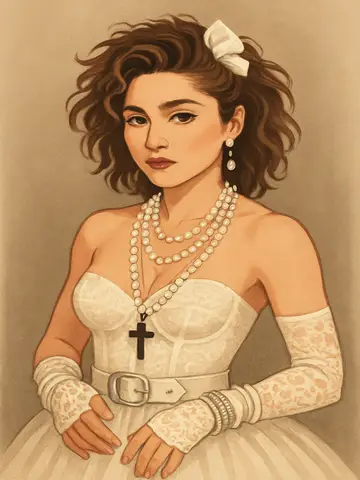
In 1984 Madonna marked the history of pop music with the release of her second album, Like a Virgin. This opus, which bears the same name as its famous single, has propelled the singer into a global phenomenon. Between its bold aesthetic and provocative themes, Like a Virgin not only redefined the music codes of the 1980s, but also challenged the social and cultural norms of the time.
The revolutionary impact of Like a Virgin in 1984
Like a Virgin imposed itself as a manifesto of women's liberation and artistic reinvention. As soon as it was released, the album sparked intense controversy, notably because of its provocative title and bold lyrics. Yet it was precisely this provocation that allowed Madonna to capture the attention of a young and avid audience. Musically, the album mixes dance-pop rhythms with an innovative production that fits perfectly into the aesthetics of the 1980s. Singles like « Material Girl » and « Like a Virgin » became hymns, played in loops in clubs and on radio, embodying a new breath and liberating in the world of pop.
Madonna: icon and symbol of the 80's pop
Beyond her music, Madonna quickly became an emblematic figure of the 80s pop culture. With Like a Virgin, she has cultivated an image that is both provocative and accessible, mixing fashion, performance and controversy. His bold style — corsets, plastic jewelry, bleached blonde hair — inspired thousands of fans and influenced fashion for a decade. Madonna was not just a singer, but an icon that used her music to express a vision of female emancipation and assumed sexuality. This posture allowed him to become an indispensable artist, defying conventions and paving the way for future generations of performers.
Like a Virgin It's not just an album, it's a cultural turning point that defined an era and an attitude. In 1984, Madonna was able to capture the spirit of youth freedom and rebellion, while laying the foundations for a career that would profoundly influence music and society. More than thirty years after his release, Like a Virgin remains a powerful symbol of audacity and artistic innovation in the 1980s.