


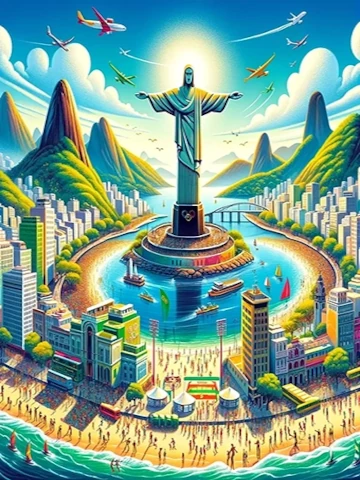
The 2016 Rio de Janeiro Olympic Games marked a historic milestone as the first edition in South America. This global sporting event brought together thousands of athletes from all continents to compete in a spirit of peace and excellence. More than just a competition, these Games have left a lasting mark on both sport and socio-cultural issues.
Highlights of the Rio 2016 Olympic Games
The Rio Olympic Games were punctuated with memorable performances and emotional moments. Among the most notable, the spectacular victory of Usain Bolt, who confirmed his supremacy in the sprint events, captivated spectators from all over the world. Similarly, Simone Biles shined in artistic gymnastics, demonstrating outstanding technical mastery. The Olympics were also the scene of first historical events, such as the participation of refugee athletes under the Olympic banner, a symbol of hope and unity. Not to mention thrilling competitions in less mediated disciplines, such as the seven-way rugby, which made its first appearance on the Olympic programme.
Impact and legacy of the Rio Olympics on global sport
Beyond performance, the Rio Games contributed to increasing the visibility of sport in emerging regions, particularly in Latin America. The organisation of this event highlighted the logistical and environmental challenges, encouraging the Olympic movement to rethink its models for more sustainability. At the sporting level, Rio has enabled many countries to make their debut or assert themselves on the international stage, fostering greater diversity in Olympic disciplines. Finally, this event stimulated infrastructure projects and social initiatives which, despite some controversy, transformed neighbourhoods and encouraged sport among young people.
The Rio 2016 Olympic Games will remain in memory as a time when sport has been able to cross cultural and geographical boundaries, offering the world a vibrant celebration of diversity and human perseverance. Their legacy continues to inspire athletes and spectators while laying the foundations for a more inclusive and responsible future evolution of the Games.