

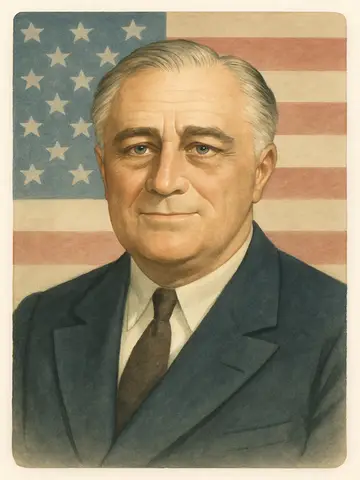
In 1933, Franklin D. Roosevelt became an emblematic figure in American history by gaining the presidency of the United States in the midst of Great Depression. His election marked a crucial turning point for the country, which desperately sought solutions to the most severe economic crisis of the twentieth century. Roosevelt then embodied the hope of renewed and strong government action to re-establish the nation.
Franklin D. Roosevelt: 1933 landmark election
Franklin D. Roosevelt's election to the presidency in 1933 was a historic event that reflected the deep desire of the American people for change. Faced with the economic devastation caused by the 1929 stock market crash, voters rejected the conservative approach of the previous administration. Democratic candidate Roosevelt proposed a bold and progressive vision, promising a « New Deal » for the American people. His charisma and his message of hope convinced a majority, paving the way for major reforms aimed at restoring confidence and prosperity.
The first measures of the New Deal in 1933
As soon as he took office in March 1933, Franklin D. Roosevelt launched a series of rapid and concrete measures to combat the economic crisis. The first actions included the temporary closure of banks to avoid bankruptcy and restore confidence, followed by the creation of the Federal Deposit Insurance Corporation (FDIC) to guarantee bank deposits. At the same time, Roosevelt set up relief and public works programmes, such as the Civil Conservation Corps (CCC), aimed at reducing unemployment and stimulating the economy. These New Deal initiatives laid the foundation for increased government intervention in the country's economic and social life.
The year 1933, with the election of Franklin D. Roosevelt and the launch of the New Deal, represents a decisive moment in the history of the United States. Faced with adversity, Roosevelt breathed new hope into the nation by advocating a proactive and supportive action. His leadership permanently transformed the role of the US government and offered a model for responding to economic crises, the impact of which is still felt today.