

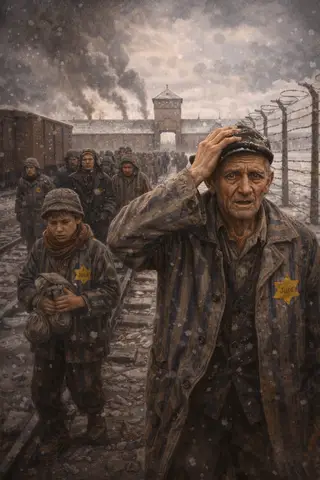
The Holocaust, a systematic genocide of the Jews of Europe by the Nazis, found in 1941 a crucial stage in its development. It was that year that persecution, which had hitherto been mainly characterized by discriminatory measures and limited deportations, turned into a large-scale, organized extermination. Understanding the beginning of the Holocaust in 1941 captures the gravity and magnitude of a tragedy that would upset the history of the twentieth century.
The tragic origins of the Holocaust in 1941
The year 1941 marks a turning point in Nazi policy towards Jews. Until then, anti-Semitic measures were mainly acts of marginalization, social and economic exclusion. However, with the invasion of the Soviet Union in June 1941, Nazi Germany intensified its actions, introducing a policy of systematic extermination. The Einsatzgruppen, mobile killer units, follow the German army and carry out mass massacres of Jewish populations in the conquered territories. This shift from persecution to direct extermination lays the foundation for an industrialization of death that culminates in the extermination camps.
The rise of Jewish persecution during the war
As the year 1941, persecution intensified throughout occupied Europe. Ghettos multiply and become places of extreme suffering where famine, epidemics and violence are common. At the same time, the establishment of the first extermination camps, like Chelmno, marks the beginning of a systematic massacre. The extermination is no longer limited to point killings but becomes a large-scale logistical and bureaucratic project. This radicalisation reflects a deliberate desire to eradicate the Jewish community as a whole, highlighting the horror of the Shoah from its beginnings in 1941.
In short, 1941 is the tragic starting point for a systematic and planned extermination, known as the Shoah. This historical shift between persecution and genocide reminds us of the importance of memory to prevent such atrocities in the future. Studying this beginning forces us to never forget the victims and to remain vigilant against all forms of hatred and intolerance.