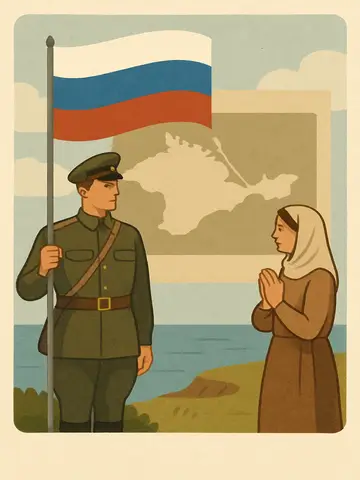
Russia's annexation of Crimea in 2014 is a major event that has profoundly disrupted geopolitical balance in Europe and beyond. This act, considered by a large part of the international community as a violation of international law, revived tensions between Russia and the West, while redefining diplomatic relations in the region. To better understand the stakes of this crisis, it is essential to revisit the historical and political context that led to this annexation, as well as the international reactions that it has generated.
Historical and Political Context of the 2014 Annexation
Crimea, a strategic peninsula on the Black Sea, has always been of major geopolitical importance because of its position and mainly Russian-speaking population. Historically linked to Russia since the 18th century, the peninsula was transferred to Ukraine in 1954 under the Soviet Union, a decision which seemed to be annoyed at the time but which acquired crucial significance after the collapse of the USSR. In 2014, following the pro-European protests in Ukraine that led to the escape of President Viktor Yanukovich, Russia seized the opportunity to intervene militarily in Crimea. Soon, a controversial referendum was held, leading to a declaration of independence followed by an annexation by Russia, justified by Moscow as protecting Russian-speaking populations and their strategic interests.
International consequences and global responses
The annexation of Crimea triggered a global shock wave. The European Union, the United States and several other countries strongly condemned this action, calling it illegal and contrary to the principles of sovereignty and territorial integrity. In response, a series of targeted economic sanctions were imposed on Russia, affecting its financial, energy and military sectors. At the same time, this crisis contributed to a significant deterioration in East-West relations, reactivating a confrontational rhetoric reminiscent of the Cold War. At the regional level, the situation has exacerbated tensions in Ukraine, leading to armed conflict in the east of the country and lasting instability. The question of Crimea remains a sensitive point in the diplomatic negotiations today, illustrating the complexity of the issues related to European sovereignty and security.
The annexation of Crimea in 2014 marks a turning point in contemporary international relations, symbolizing both historical rivalries and new geopolitical dynamics. While Russia has consolidated its presence in this strategic region, this action has also strengthened divisions and tensions at the global level. Understanding this context and its implications remains essential for understanding the current security challenges in Europe and beyond.